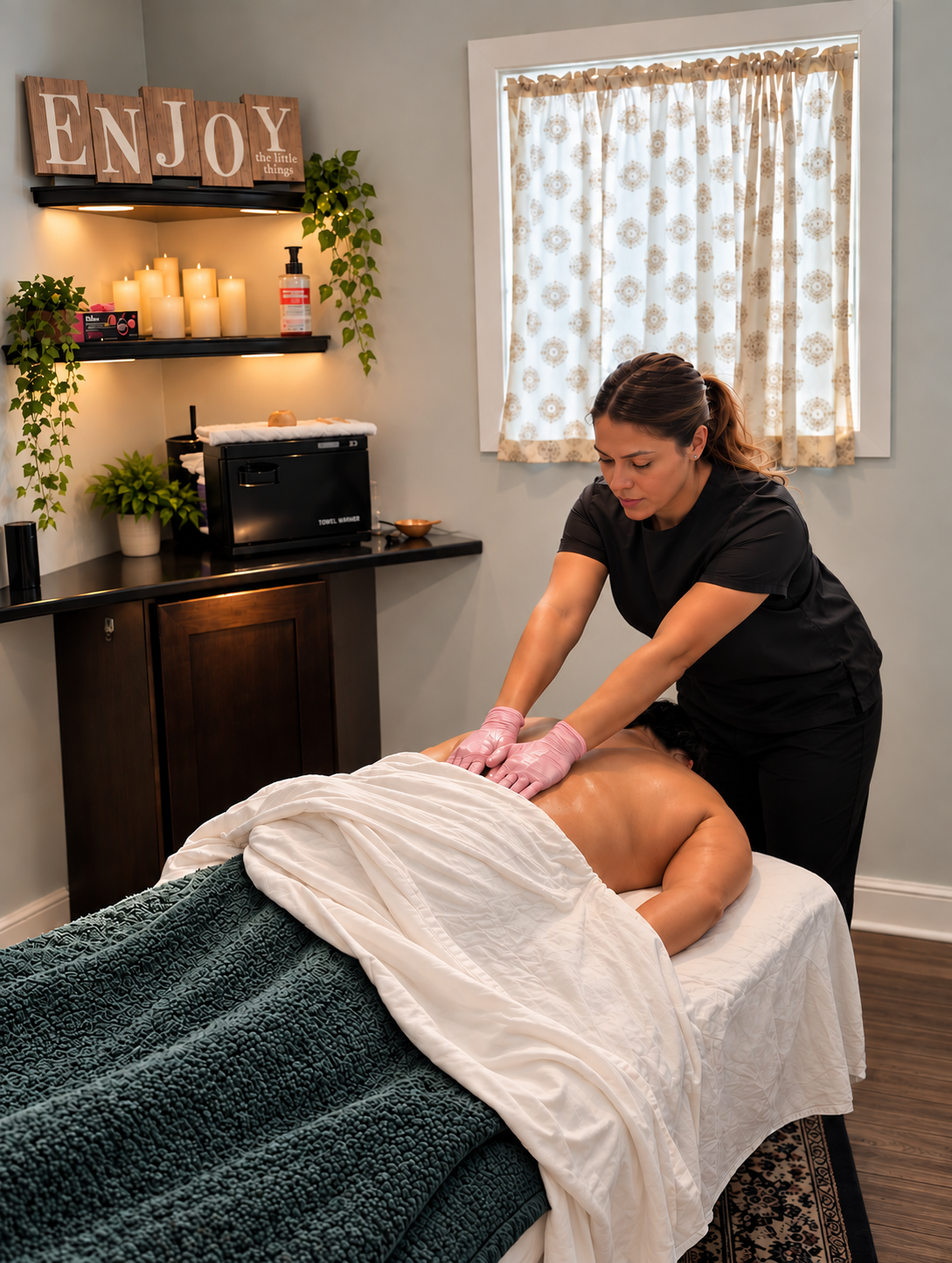
Massage at Chiropractic Neurology Center is a supportive soft-tissue service that may be coordinated with the chiropractic plan when appropriate. The massage therapist can focus on muscle tension, soreness, stiffness, and soft-tissue restrictions while working within the therapist's scope of practice and the patient's individual goals.
When massage is appropriate, the chiropractor's examination findings and treatment goals can help identify the areas that may benefit from soft-tissue work. The massage therapist then selects techniques based on the patient's comfort, presentation, and the therapist's training.
Massage may be used on its own as a supportive service or coordinated with chiropractic care, neurological-based exercises, manual traction, or other services when appropriate.
Common massage techniques used in a chiropractic setting
The exact technique varies by the patient's needs and the massage therapist's training. Common approaches may include:
Swedish or relaxation massage: broad gliding, kneading, and rhythmic strokes used to warm soft tissues and reduce general muscle tension.
Deep-tissue or focused pressure: slower, more concentrated pressure directed toward specific muscle layers and areas of persistent tightness.
Myofascial techniques: sustained pressure or gentle stretching intended to address restrictions in fascia and surrounding soft tissues.
Trigger-point or tender-point work: focused pressure applied to localized areas of muscle tenderness or tension.
Soft-tissue mobilization: kneading, stripping, cross-fiber, and other hands-on techniques selected for the involved muscle and connective tissue.
Assisted stretching and range-of-motion work: gentle stretching or movement used when appropriate to complement soft-tissue treatment.
How massage can fit into a chiropractic plan
Massage may be used before or after other care depending on the patient's needs. For some patients, soft-tissue work may help make movement or positioning more comfortable; for others, it may be used after treatment or exercise as a supportive recovery service. The order, intensity, and areas treated are individualized.
What to expect
Review
The massage therapist reviews the areas of concern, relevant history, and any guidance from the chiropractic evaluation.
Technique selection
Pressure and technique are selected according to your comfort, goals, and the tissues being addressed.
Ongoing communication
You can ask for pressure, positioning, or technique to be adjusted at any time during the session.
Coordination when needed
When massage is part of a broader plan, the therapist and chiropractic team can coordinate care within their respective scopes of practice.
When massage may need to be modified or postponed
Massage is not appropriate for every situation. Significant recent trauma, suspected fracture, acute infection, unexplained swelling or redness, open wounds, suspected blood clot, active bleeding, or other medical concerns may require modification, postponement, or medical evaluation before massage.
Information only: This page provides general educational information and is not a diagnosis, a guarantee of outcome, or a substitute for individualized medical advice or emergency care.